
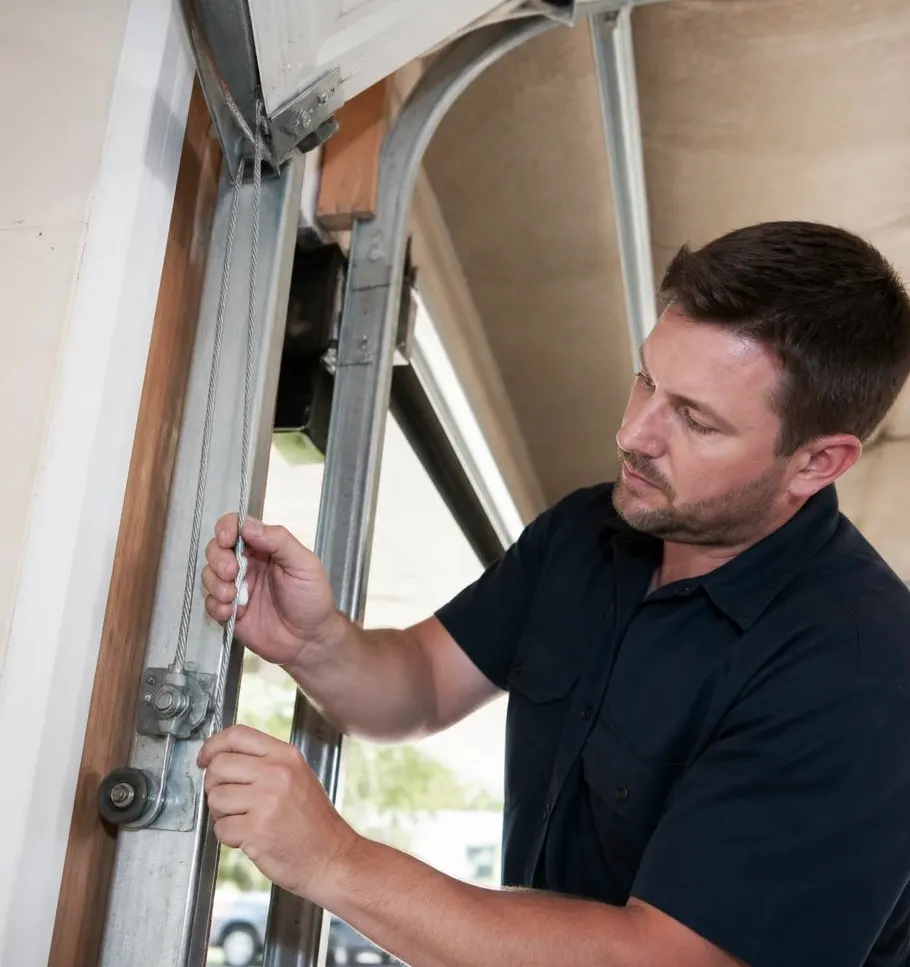
The Mistake Most People Make First
The power blinks off, you need the car out, and there's that red handle hanging from the rail staring at you. So you grab it and yank — without supporting the door first. It's tempting because the release cord looks like the obvious "emergency button," and it's right there. But a garage door can weigh well over 100 pounds, and the springs are what carry that weight, not your arms. If you disengage the trolley while the door is up and the springs are weak or already failing, the door can free-fall. If you lift unevenly after releasing it, the door can jump the track. Either way, what started as a power outage turns into a repair bill. Knowing the right order of steps matters more than knowing the red handle exists.
Tools You'll Need
- A flashlight or headlamp (garages get dark fast when the power's out)
- Work gloves
- A locking pliers (Vise-Grip) or C-clamp, if you need to prop the door open
- A stepladder, only if your release cord is mounted high
- No special tools are needed to disengage or reconnect a standard opener — it's designed to be operated by hand
How to Open the Door Manually
- Cut power to the opener first. If the outage is partial (some circuits still live) or you're not sure, unplug the opener or flip its breaker. You don't want it trying to move once power returns while you're mid-repair.
- Check for ice at the bottom seal before you pull anything. In a Michigan City winter, melted snow can refreeze overnight and glue the weatherstripping to the slab. If the door feels stuck at the bottom, don't force the release — warm the seal with lukewarm water or a hair dryer first, or you'll strain the cables trying to break an ice bond.
- Locate the emergency release cord — the red handle hanging from a lever on the trolley, usually a few feet back from the door on the rail.
- Support the door before you pull. If the door is already down, you're in good shape — gravity isn't working against you yet. If it's up, have someone brace it or be ready to hold its weight the moment it's released.
- Pull the cord down and toward the motor (check your opener's label — direction varies by brand) to unhook the trolley from the carriage.
- Lift the door by its handle or the embedded grips, using a smooth, even motion with your legs, not your back. A balanced door should rise with moderate, steady effort. If it feels heavy, jerky, or lopsided, stop — that's a spring or cable problem, not something to push through by hand.
- Prop it open if you need it to stay up, especially on a gusty fall day. Clamp a locking pliers onto the track just below the bottom roller on each side so a sudden wind can't slam the door down on its own.
How to Close the Door Manually
- Remove any clamps or props holding the door open.
- Grip the bottom handle with both hands and guide the door down slowly and evenly — don't let it drop under its own weight.
- Confirm it seats fully against the floor and locks if it has a manual lock feature, especially if the outage is overnight.
Re-Engaging the Opener Once Power Is Back
- Make sure the door is fully closed and sitting square before reconnecting — reconnecting with the door partway open or crooked can throw off the opener's travel limits.
- Restore power to the opener (plug it back in or reset the breaker).
- Pull the release cord again and guide the trolley back toward the carriage until you hear or feel it click into place. On some models you'll need to trigger the opener briefly with the wall button to let it grab the trolley.
- Test with the wall button first, not the remote, and stand clear of the door's path while it cycles.
- Watch the safety sensors. The two photo-eye sensors near the floor on each side of the track can get bumped out of alignment, especially if anything shifted in the garage during the outage. If the door reverses unexpectedly or won't close at all, that's usually a sensor alignment issue.
- If you have a battery backup system and the keypad or clock lost its programming, you may need to re-enter codes once power is stable.
What You Can Handle vs. What Needs a Technician
Homeowner-safe
- Disengaging and reconnecting the release cord
- Manually opening and closing a door that moves smoothly and evenly
- Propping the door open temporarily
- Realigning sensors that are only slightly knocked off (gently nudging them back and checking for a solid light)
Call a technician
- The door feels heavy, uneven, or won't budge after you've released the trolley — likely a spring or cable issue
- The door came off the track during manual operation
- The trolley won't reconnect to the carriage or the opener grinds without moving the door
- Sensors stay misaligned no matter how you adjust them
- A battery backup that won't hold a charge through an outage
When to Call Michigan City Garage & Gate
If your door won't lift evenly, feels unusually heavy, or slams instead of gliding, that's a job for a technician, not another pull on the release cord. Our team handles Garage Door Spring Replacement for doors that have gone out of balance, and Garage Door Opener Service for units that won't reconnect, won't hold a program, or have a battery backup that's due for a check before winter ice storms start knocking out power. With cold, icy winters and heavy spring storms both part of the forecast here, it's worth having springs, cables, and sensors inspected now rather than during the next outage.
If your garage door isn't opening or closing the way it should — whether the power just came back or it's been acting up for weeks — call Michigan City Garage & Gate. We serve homeowners throughout Michigan City, IN and the surrounding area, and we're ready to get your door running safely again.